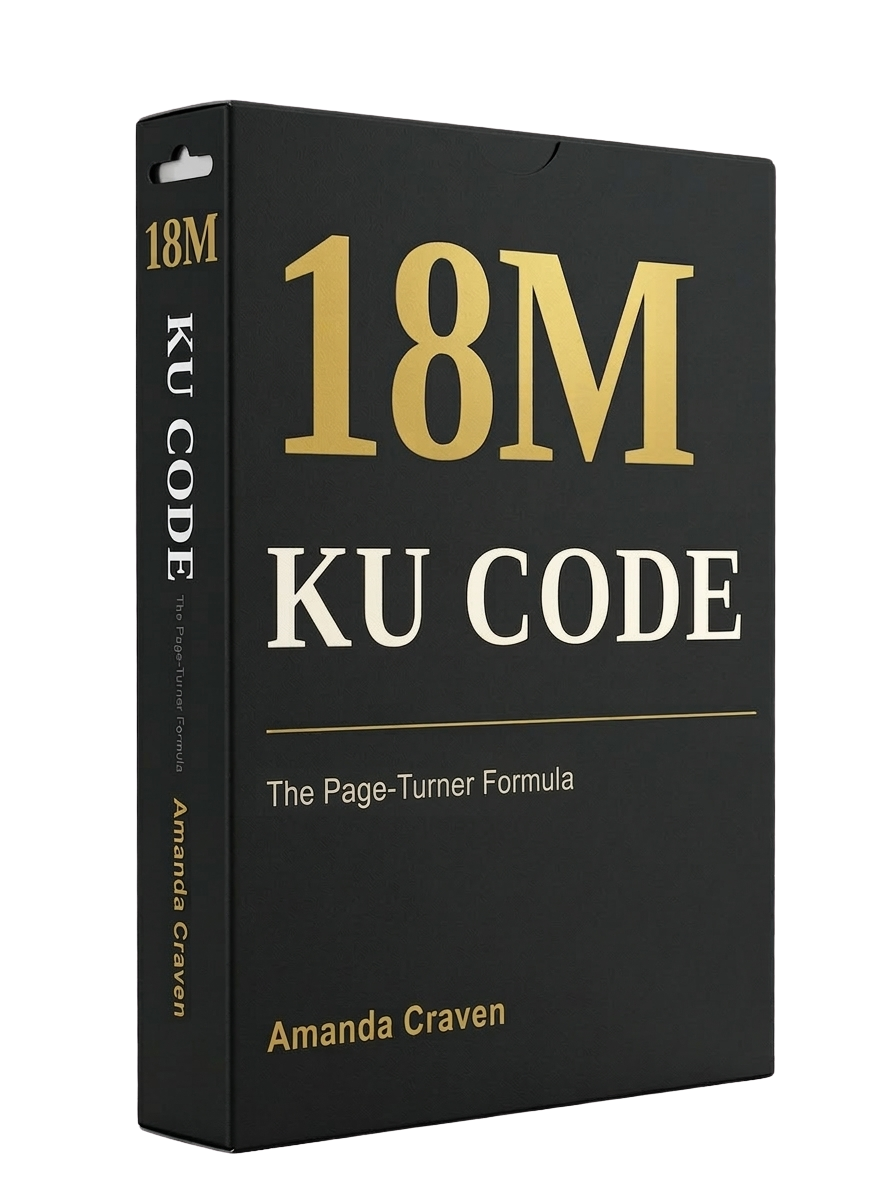
The 18M KU Code teaches you how to write one Kindle book readers can’t put down. The KU Publishing Business Blueprint shows you how to turn that into an entire catalogue where every book you publish makes all the others more valuable.
One Book Is Proof. This Is What Comes After.
The 18m KU Code is based on 18,132,527 page reads across six books.
Those weren’t six separate lucky accidents.
They were a catalogue – built deliberately, with each book designed to make the others earn more.
Most Kindle authors write one book, watch what happens, then write another one by instinct.
They pick the next subject because it feels related.
They decide whether to write a series because they’ve heard series do well.
They build their backlist the way most people pack a suitcase – by feel, without a list, hoping they haven’t forgotten anything important.
The writers who build catalogues that compound with each book made specific decisions early that the writers who plateau didn’t make.
Most of those decisions happen before the second book is written.
Some of them happen before the first book is finished.
The Blueprint is those decisions – made before you need to make them, by someone who’s already made them at scale.
What The Blueprint Covers
Seven components.
Each one is a decision that determines what your catalogue can eventually become.
The Compounding Catalogue Model
Why a catalogue earns differently from a single title – and how to build one where every new book adds income to everything already published.
Niche Architecture
How to choose your second subject deliberately rather than by instinct. Adjacent niches versus deepening niches. When to use a pen name. Whether your current niche supports another book right now.
The Standalone-Series Decision
The honest answer from someone who has written books that work as both – when series structure maximises earnings, when it limits your audience, and the middle path most successful KU catalogues actually use.
Building Read-Through
How to make a reader who finishes one book immediately go looking for the next. The cross-book structure, the five thread techniques, and the back matter that does the job of an algorithm.
Scaling the Writing Process
What genuinely gets faster as you write more books and the two traps that cause most writers to speed up in ways that kill their page reads.
Catalogue Management
What numbers actually matter, when a niche supports another book and when to update an existing title versus write something new.
The Niche Viability Scorecard and Catalogue Planner
A scoring tool for evaluating whether a niche supports your next book right now and a fill-in planner that walks you through every major catalogue decision before you make it.
What You’re Actually Investing In
You’re not buying more writing advice. You have the formula.
You’re buying the decisions that determine what your publishing business looks like in three years – made now, before the mistakes that are impossible to undo.
A writer who publishes a second book by instinct and a writer who publishes it using the Blueprint will often produce similar books.
The difference shows up eighteen months later, when one of them has a catalogue where every title is pulling readers toward the others and one of them has a list of books that earn independently and don’t compound.
What the catalogue looks like in three years
Six books. Each one in a niche that connects to the others. A reader who discovers any one of them has a clear path to the next. A new title adds page reads to books published two years ago. Monthly earnings that grow because the backlist is still working – not because you published something new last week.
Yes Add The Blueprint
This is a direct download – no logins or passwords required.
If you need support, please contact us here
Not Sure This Is For You?
Skip it if...
You’re in the early stages of writing your first book and you’re not yet thinking about what comes after it. Finish the first book, see the results, then come back. The Blueprint is more useful once you have real data to build on.
Add it if...
You’re already thinking about your second book – or you want to make sure the decisions you make on the first one don’t limit what the catalogue can become. The best time to read the Blueprint is before the second book is written, not after.
The formula tells you how to write a book readers can’t put down.
The Blueprint tells you how to make sure every book you write after that makes all the others more valuable.
This is a direct download – no logins or passwords required.
If you need support, please contact us here